

Define the need before the model
A team can need the same technical skill for very different reasons. One business might need an engineer to complete a migration. Another needs someone to maintain a product over several years. Both briefs may mention the same programming language, but the responsibilities, working relationships and hiring decisions are different.
Start by describing the result you need. Is there a defined deliverable, a temporary capacity gap or continuing ownership? Then describe the environment: the team already in place, the systems involved and the decisions the person will make. That context helps you evaluate an engagement model without treating it as a shortcut to finding the right person.
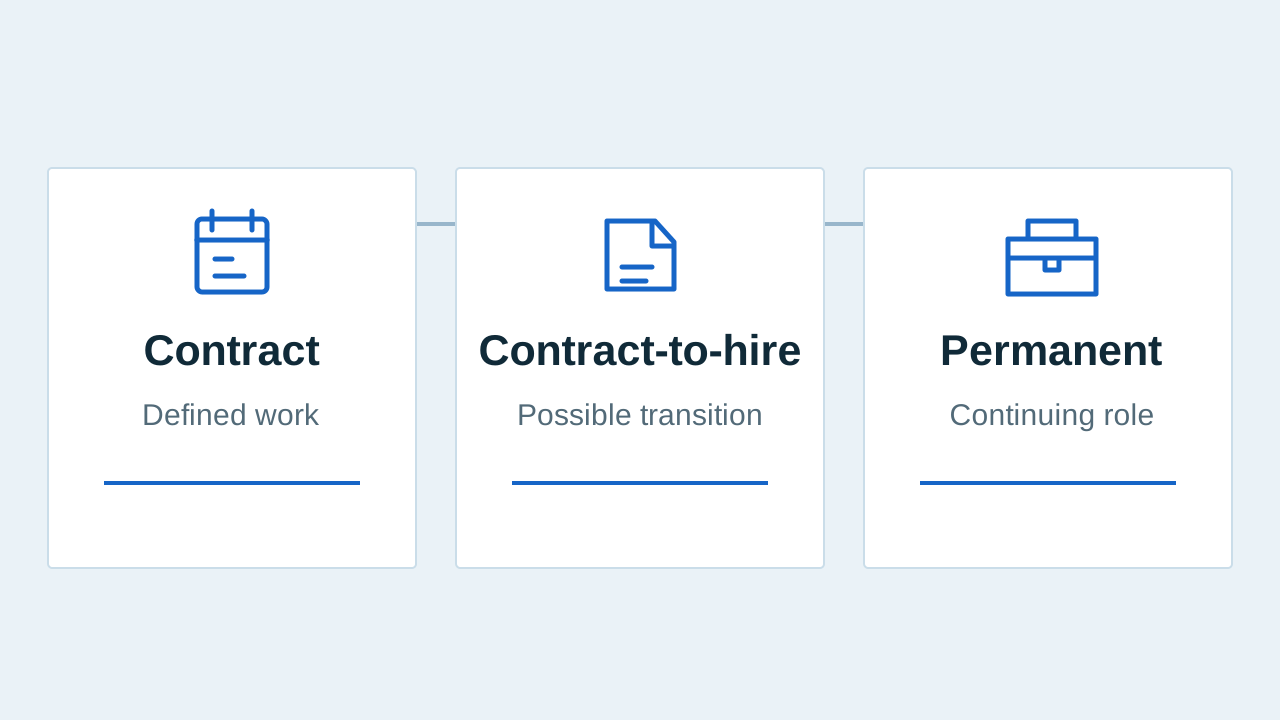
Contract
Defined assignment
Contract-to-hire
Possible transition
Permanent
Continuing ownership
Contract staffing: a defined period of work
Contract staffing can suit a need with a practical boundary: a project phase, a particular piece of specialist work or additional capacity for a period. A useful brief explains what the professional will do, who directs the work and when the engagement is expected to finish. A duration alone is not a scope.
Consider the handover as well as the start. If the person builds a deployment pipeline, who will operate it afterwards? If they support a migration, what documentation and knowledge transfer should the team receive? Clarifying those responsibilities makes the assignment easier to discuss and gives candidates a more realistic picture of the work.
Permanent placement: continuing ownership
Permanent hiring is often the better question when responsibilities continue beyond a project. A product engineer might evolve a service, maintain its quality and contribute to technical decisions over time. An infrastructure lead might own an operating environment and develop the team around it.
For these roles, evaluate more than immediate task coverage. Discuss the working environment, reporting relationships and expectations after the first few months. Be specific about what is established and what the person will need to shape. Calling a role permanent does not make its remit clear; the brief still needs to explain the work and its boundaries.
Think in
two dimensions.
Contract
A defined assignment
Contract-to-hire
A possible transition
Permanent
A continuing role
Discuss the duration and ownership together.
Duration. Ownership. The next decision.
A defined assignment can suit contract staffing. Continuing role ownership can suit permanent hiring. An initial engagement with a possible transition can suit contract-to-hire. Discuss the terms.
Contract-to-hire: discuss the possible transition
A contract-to-hire arrangement starts with a contract engagement and allows a potential permanent move to be considered later. It can create time to understand the working relationship, but it should not leave the candidate guessing about the plan. Discuss the evaluation period, the responsibilities during it and the conditions of any possible conversion.
Keep the distinction between an opportunity and a promise. A possible permanent position depends on agreed terms and a later decision; it is not guaranteed merely because the engagement uses this label. Before proceeding, employers should review employment, contractual and commercial considerations with the appropriate advisers for their situation.
Compare the decisions that matter
Use three questions to make the comparison useful. How long will the need last? Who will own the work after the immediate task is finished? How much uncertainty remains about the role or working relationship? The answers are more informative than choosing the option that appears quickest at first glance.
For example, a six-month migration might point towards a contract assignment when the existing team will own the resulting system. If the business also needs someone to establish and lead continuing platform operations, there may be a separate permanent role. Splitting those needs can produce clearer briefs than asking one person to cover an undefined mixture.
Decide how you will assess relevant experience before the search begins. A contract assignment may need evidence of working within a similar delivery context; a permanent role may involve wider discussion of continuing ownership. Keep the interview focused on those responsibilities, and tell candidates what the process involves. The engagement label is useful, but a consistent evaluation process still matters in every model.
Share the technical requirements, expected duration, working arrangement and decision timeline when you enquire. You do not need a perfect document to start a conversation. You do need enough context to discuss what kind of engagement could serve the work—and what still needs to be agreed before anyone joins.
Further reading
General guidance, rather than a description of a specific vacancy or a substitute for advice about your circumstances.